
The Shift Starts with How You Lead
- Maarten Pas
- Dec 10, 2025
- 2 min read
Updated: Dec 11, 2025
A shift usually starts with a simple briefing, a few minutes to align on the plan and priorities. In that moment, workers form an impression not just of the tasks ahead, but of whether expectations feel clear, consistent, and achievable. Supervisors may not write about the safety strategy, but they determine how it shows up in real work. They connect policy to practice and set the tone that shapes day-to-day behaviors.

But a supervisor’s influence is shaped by the system around them, such as staffing levels, time pressure, competing with KPIs, communication gaps, and the quality of training people receive - how you lead. Many supervisors have deep operational experience, yet there is little room to lead. They are expected to coach, reinforce standards, and check understanding while navigating conditions they do not control. That is a support issue, not a capability issue.
One of the biggest gaps is visibility. Supervisors rarely know how well training has been absorbed or where uncertainty is being built. They rely on intuition and observation, which are helpful but incomplete.
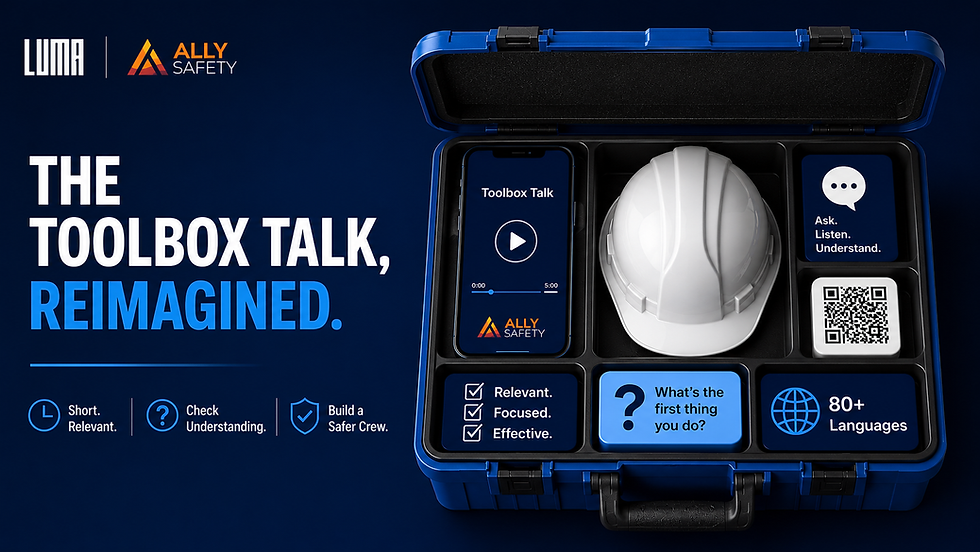
Modern learning platforms are beginning to change this, not through heavier reporting, but through short, simple signals. When workers complete micro-refreshers or respond to quick scenario checks, supervisors and managers gain an early sense of where confidence is strong and where drift may be starting. Systems like LUMA1 support this by delivering brief, practical interactions that surface clarity or hesitation without adding burden.
These signals are not about judging workers. They help supervisors tailor coaching, reinforce the right points, and align expectations across shifts. When everyone, from supervisors to managers to leaders, sees the same patterns, conversations improve, pressure points become clearer, and safety becomes more predictable.
Strong supervision does not come from asking people to work harder. It comes from giving them space, clarity, and small insights that make leadership easier. When the system supports supervisors with timely information, and when learning tools provide simple, real-world signals, frontline teams stay more aligned, and organizations see fewer surprises.
Consistent safety is not built on intuition alone. It is built on the right conditions and the right signals at the right time.
Discover how LUMA1 supports supervisors with timely information helping frontline teams stay more aligned and reducing surprises that drive risk.


Comments